

“Identify vulnerabilities before attackers do and safeguard your business with proactive security.”
What is Network Penetration Testing?
Network penetration testing (VAPT) involves simulating real-world cyberattacks to uncover vulnerabilities within your internal and external networks. These tests help identify weaknesses in firewalls, servers, routers, switches, wireless networks, and connected assets before attackers exploit them.

Speak with our security experts and discuss your specific testing needs.
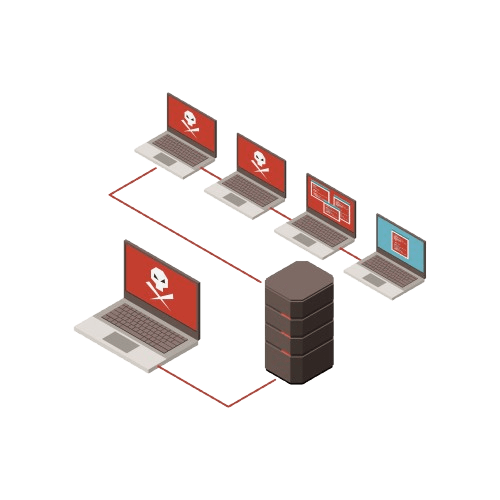
Why Do You Need Network Penetration Testing?
Protect Against Unauthorized Access: Attackers target networks to access internal systems and sensitive data.
Meet Compliance Standards: PCI-DSS, ISO 27001, NIS2, and SOC 2 require regular network security assessments.
Avoid Financial and Reputational Losses: Network compromises can lead to ransomware attacks, data theft, and operational shutdowns.
What We Look For:
Using industry standards like OWASP, NIST, MITRE ATT&CK, and CIS, we identify:
- N01:2025 – Open Ports & Unpatched Services
- N02:2025 – Weak Network Segmentation
- N03:2025 – Misconfigured Firewalls & Routers
- N04:2025 – Insecure Protocols
- N05:2025 – Credential & Password Weaknesses
- N06:2025 – Insider Attack & Lateral Movement Risks
- N07:2025 – Vulnerable Devices and IoT
- N08:2025 – Missing Security Controls
- N09:2025 – Logging & Monitoring Failures
- N10:2025 – Misconfigured Wireless Networks

If you want to know how Vaptora’s Web Application Penetration Testing can secure your app, here’s what you can do next
Our Methodology
Aligned with PTES, NIST SP 800-115, and OSSTMM
01.
Pre-Engagement Activities
- Scope Definition
- Rules of Engagement
- Required Access (network diagrams, test IPs, credentials)
02.
Reconnaissance & Information Gathering
- Passive Recon (DNS, public services)
- Active Recon (port scanning, fingerprinting)
03.
Enumeration
Identifying network services, systems, shares, active hosts, and potential attack paths.
04.
Threat Modeling
Mapping likely entry points such as misconfigurations, outdated services, and weak segmentation.
07.
Exploitation & Validation
Controlled exploitation to confirm real risks.
10.
Retesting
Verification that your network has been fully secured.
05.
Automated Scanning
Running scanning tools to detect vulnerabilities in network components.
08.
Post-Exploitation
Assessing internal spread, privilege abuse, and data accessibility.
06.
Manual Vulnerability Testing
Deep assessment including misconfiguration exploitation, privilege escalation, and lateral movement.
09.
Reporting & Remediation
Includes:
- Executive Summary
- Technical Findings
- Remediation Strategy

Why Choose Vaptora?
- Expert Network Security Professionals with deep understanding of enterprise networks.
- Comprehensive Testing of internal, external, and wireless networks.
- No Disruptions to business continuity.
- Actionable Reports with remediation steps.